 Ultimate guide
Are Professional Home Insulation Services Worth It?
Last Updated: November 12, 2026
Quick Summary
Professional home insulation is the installation of insulating material in walls, attics, floors and crawl spaces by trained contractors, who also seal the gaps that let conditioned air escape. Its main benefits are lower energy bills and more consistent indoor temperatures, and older under-insulated homes usually see the largest difference.
- Heat leaking through an uninsulated attic can drive up furnace workload in winter.
- Compressed batts lose rated R-value, and gaps create convection loops inside the cavity.
- Ask each quote to state material, installed R-value, depth and square footage covered.
- Air sealing around windows, outlets and rim joists often comes before adding insulation.
- Keep invoices, product data sheets and before-and-after photos for future buyers or appraisers.
Table of Contents
- What Professional Home Insulation Actually Does for Your House
- Lower Energy Bills and More Consistent Indoor Temperatures
- Insulation R-Value Explained: How to Read the Numbers
- Signs Your Home Needs More Insulation
- Air Sealing, Drafts, Noise Control and Indoor Air Quality
- Federal Energy Tax Credits for Insulation and Resale Value
- Choosing a Professional Installer and Verifying the Work
- Booking Your Free Estimate for Home Insulation Work
- Frequently Asked Questions
What Professional Home Insulation Actually Does for Your House
Professional home insulation is the installation of insulating material in walls, attics, floors and crawl spaces by trained contractors, who also seal the gaps that let conditioned air escape. Heat leaking through an uninsulated attic can drive up the furnace's workload in winter. Local Mid-Michigan roofing and home repair services can help you check whether roof or exterior issues are also contributing to heat loss. U.S. Department of Energy guide to home insulation
Insulation works by slowing heat transfer. Heat moves out of a house through conduction, convection and radiation, and insulation resists all three by trapping still air in small pockets. A contractor's job is to make sure that barrier is continuous, dense enough and free of the gaps that undermine it.
Doing it yourself is possible for simple attic top-ups, but walls, rim joists and hard-to-reach cavities usually need specialized equipment and experience.
Lower Energy Bills and More Consistent Indoor Temperatures
The savings depend on how leaky the house was to begin with, so an older home with an under-insulated attic will usually see the largest difference.
Consistent temperatures are the benefit people notice first. Rooms closest to an exposed attic or cold wall stop feeling chilly, and the furnace runs in shorter cycles instead of long, straining bursts. That also reduces wear on the heating system.
Expect the bill savings to build gradually over a heating season rather than appear overnight. Ask any contractor to show you the insulation levels before and after the job so you can compare them against your own utility history.
Insulation R-Value Explained: How to Read the Numbers
R-value measures resistance to heat flow. Higher R-values mean greater thermal resistance. Some material comparisons state R-value per inch, while product labels may state the total R-value at a specified installed thickness. Check which value is being quoted, and compare the manufacturer-rated installed R-value, thickness and coverage rather than thickness alone.
Common residential materials and their general per-inch R-values:
- Fiberglass batts and blown fiberglass: roughly R-2.9 to R-3.8 per inch, depending on density and product line.
- Cellulose (blown loose-fill): roughly R-3.1 to R-3.7 per inch.
- Open-cell spray polyurethane foam: roughly R-3.6 to R-3.9 per inch.
- Closed-cell spray polyurethane foam: roughly R-6.0 to R-7.0 per inch, and it also acts as an air barrier and vapor retarder.
- Rigid foam boards (polyiso, XPS, EPS): roughly R-3.8 to R-6.5 per inch depending on product and temperature performance.
Those ranges come from manufacturer data sheets, so always read the specific product's published value rather than relying on a generic figure. Official guidance from the U.S. Department of Energy publishes recommended R-value ranges by climate zone and by building assembly (Energy-Efficient Home Improvement Credit Insulation and Air-Sealing Essentials). Ask your contractor to identify the applicable climate zone for your address and to cite the current DOE recommendation for each assembly before quoting.
R-value is not the whole story. Installed performance depends on how the material is installed: compressed batts lose rated value, gaps and voids create convection loops inside the cavity, and wind washing at the attic edge can strip performance from otherwise adequate insulation. That is why a quote should state both the product's rated R-value and the installed thickness and coverage area, not just a single number.
A quote that lists only a total R-value without stating the material, the installed depth, and the square footage covered makes the work hard to verify, so ask for all three in writing before signing.
Look for the R-value printed on the product packaging and on the installer's paperwork. If a quote does not state the R-value being installed, ask for it in writing before work begins.
The article lists typical R-values per inch for common residential insulation materials.
Material | Typical R-value per inch | Note |
|---|---|---|
Fiberglass batts and blown fiberglass | Roughly R-2.9 to R-3.8 | Varies by density and product line |
Cellulose (blown loose-fill) | Roughly R-3.1 to R-3.7 | Blown loose-fill |
Open-cell spray foam | Roughly R-3.6 to R-3.9 | Spray polyurethane foam |
Closed-cell spray foam | Roughly R-6.0 to R-7.0 | Also acts as air barrier and vapor retarder |
Rigid foam boards (polyiso, XPS, EPS) | Roughly R-3.8 to R-6.5 | Depends on product and temperature performance |
Signs Your Home Needs More Insulation
Several warning signs suggest your insulation is inadequate. Before deciding on insulation, you can review roofing, siding and exterior damage that can mimic insulation problems. Rooms that feel drafty even with the windows shut, a furnace that runs almost constantly during cold snaps, and ice dams forming along the roof edge are all common clues.
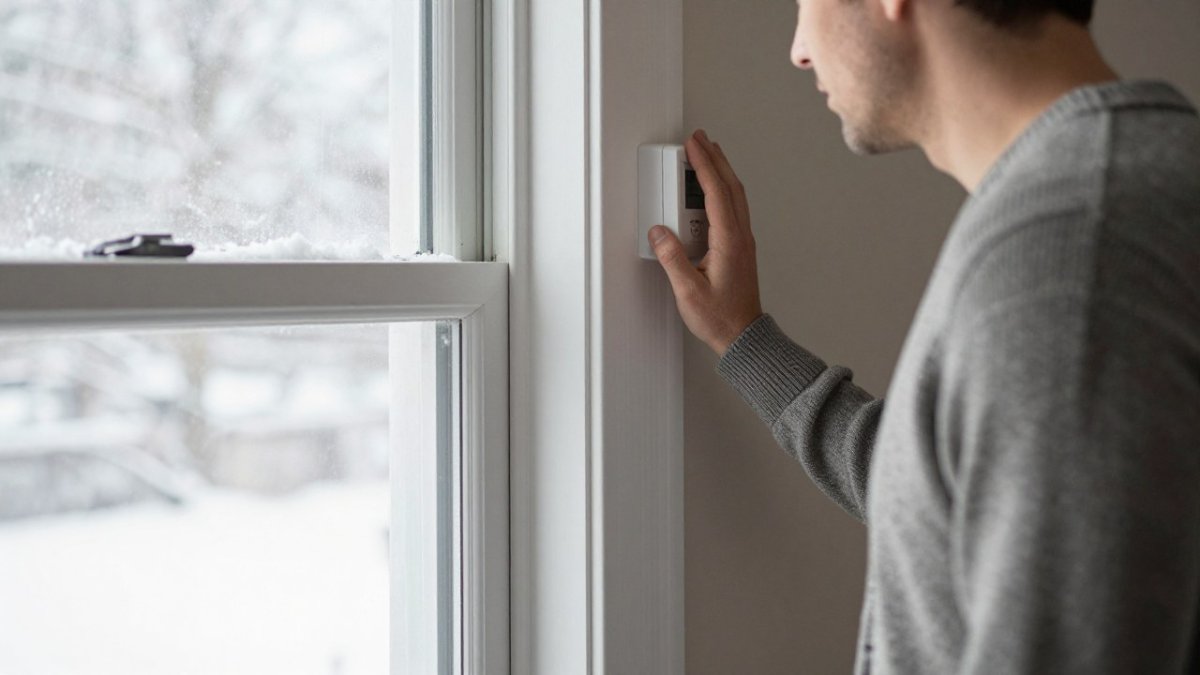
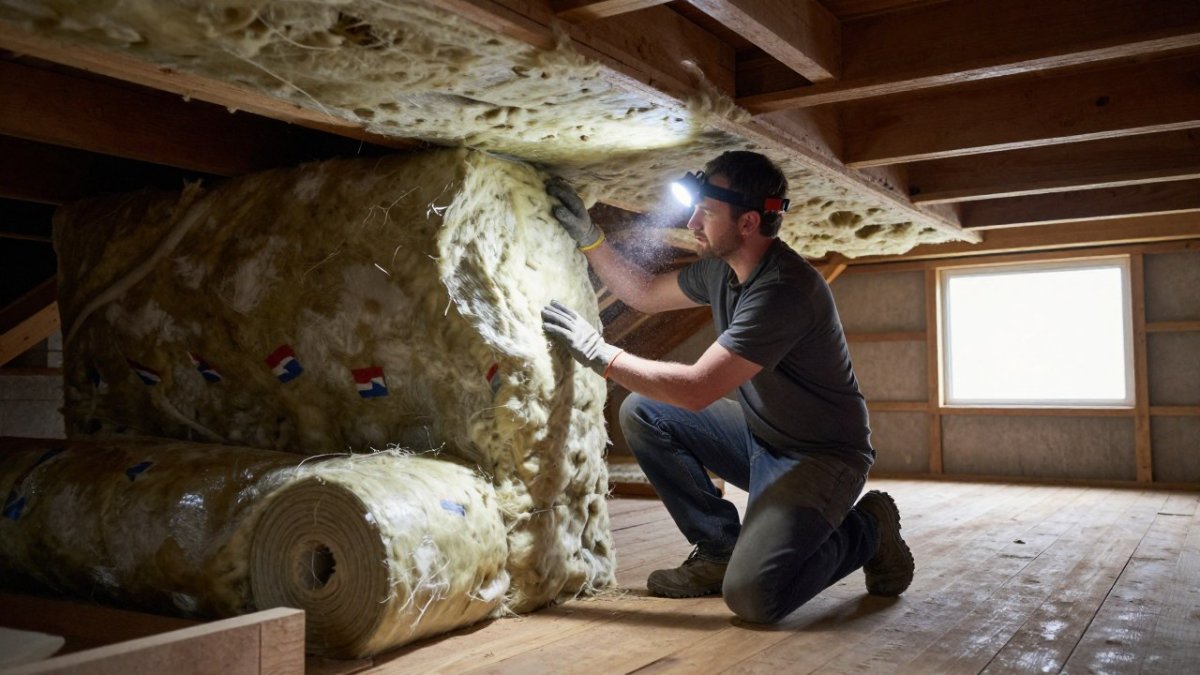
Check the attic as well. Compressed, wet, damaged or uneven insulation may need attention. Dust or insulation sitting below the joists alone does not establish its effectiveness: the material, condition, installed depth and rated R-value matter. Have those factors assessed before deciding whether to add or replace insulation.
If you notice several of these signs together, it is worth having a contractor inspect the house. Some problems, such as damaged roofing or siding that lets water into the wall cavity, need to be fixed before new insulation goes in.
Air Sealing, Drafts, Noise Control and Indoor Air Quality
Insulation alone does not stop air leakage. Gaps around window frames, electrical outlets, plumbing penetrations and the rim joist can let significant conditioned air escape, which is why professional installers often air seal before adding insulation.
Air sealing also reduces outside noise and helps control dust and pollen entering the home. Properly sealed and insulated walls can make a noticeable difference to how much traffic or neighborhood noise reaches the living space.
Indoor air quality depends on ventilation as well. Tightening a house without adequate ventilation can trap moisture and pollutants, so a good contractor will check the ventilation plan alongside the insulation work.
Federal Energy Tax Credits for Insulation and Resale Value
Most homeowners want to know what insulation costs and how long it takes to pay back. The honest answer is that costs vary widely by region, home size, and which assemblies are addressed, so treat any single national number with suspicion. Get at least three itemized quotes and compare them line by line, material, labor, air sealing scope, and disposal, rather than comparing lump sums.
Payback is best framed as a range, not a promise. Savings depend on how under-insulated the house was, local energy prices, and how the home is operated. A useful approach is to ask each contractor for their pre- and post-project insulation levels and to compare your own utility bills across a full heating and cooling season before and after the work. Do not accept a projected savings figure that is not tied to your home's specific starting conditions.
As of November 12, 2026, the IRS states that the federal Energy Efficient Home Improvement Credit applies to qualifying improvements made through December 31, 2025. Do not budget for that credit on new insulation work completed in 2026. Consult the IRS or a qualified tax professional about earlier eligible work and any later legislative changes. Source: https://www.irs.gov/credits-deductions/energy-efficient-home-improvement-credit
State and utility incentives are a separate layer. Some utilities run rebate programs for insulation work, and eligibility rules vary by program. The fastest way to confirm what applies to your address is to check your utility's rebate page and your state energy office before work begins, some programs require approval before installation, and work done first can be disqualified.
Confirm the sequence before you schedule the job, since some rebate programs require approval before installation.
Buyers and home inspectors often look at attic insulation depth and air sealing, so keeping documentation of upgrades can help. Keep every invoice, product data sheet, R-value specification, and before-and-after photo in one file so a future buyer or appraiser can verify what was done and to what standard.
Choosing a Professional Installer and Verifying the Work
Start by asking how long the company has been in business and whether it is licensed and insured for the work you need. Request references from recent jobs similar to yours, and read reviews with an eye to how the company handled problems, not just how it started.
A written estimate should list the insulation type, the R-value, the areas covered, the air sealing scope and the warranty terms. Be wary of quotes that give only a single lump sum with no breakdown.
Verify the work once it is finished. Ask for photos of the insulation in place, confirm the depth and coverage in the attic, and check that no areas were left uninsulated. A reputable contractor will welcome this inspection.
Booking Your Free Estimate for Home Insulation Work
Local Big Brothers is a family-owned construction and remodeling business serving Flushing, Michigan, and surrounding communities. Tell us what you want to improve and where your property is located so we can discuss the scope and an estimate.
To discuss your insulation project, call (810) 328-3399 or visit https://localbigbrothers.com/ and use the contact form. Include your property location, the areas you want assessed and any drafts or moisture concerns. Scheduling and pricing are confirmed individually.
Frequently Asked Questions
What is the average cost to insulate a 2000 square foot house?
Insulation cost varies widely with the material, the areas being treated (attic, walls, crawlspace), the depth needed to reach your target R-value and the condition of the existing structure. Because prices depend on these factors, the most reliable figure comes from a written, on-site estimate. Local Big Brothers offers free estimates.
Is there a tax credit for adding insulation to your house?
The IRS states that the federal Energy Efficient Home Improvement Credit applies to qualifying improvements made through December 31, 2025. As of November 12, 2026, do not assume that credit is available for new work completed in 2026. Ask a qualified tax professional about earlier eligible work. State or utility rebates are separate programs; verify current eligibility and any preapproval before work starts.
How does professional insulation improve indoor air quality?
Professional insulation work typically includes air sealing, which closes gaps where outdoor air, dust, pollen and humidity enter the house. Reducing uncontrolled air leakage can make it easier to keep indoor air more consistent, and proper moisture management helps prevent condensation that encourages mold.
Does professional insulation increase home resale value?
Improved insulation can make a home more appealing to buyers because it supports lower heating and cooling costs and steadier indoor temperatures. Keep documentation of the work, including the materials used, the R-value achieved and the installer's paperwork, since buyers and inspectors value verifiable improvements. Resale value depends on the local market, so the benefit is best viewed as a supporting factor rather than a guaranteed return.